Tuesday, 25 May 2010

Momcheto si Otiva


Since I've blogged about various international and American films, maybe I should write about a Bulgarian film as well. A classic from the 70's, translated as "The Boy turns Man", directed by Людмил Кирков , the film tells the story of Ran who is about to graduate from high school and continue his journey into the endless, but in the same time constricted sea of the socialist life. Bright and ambitious, Ran doesn't intend to follow any safe path that is laid for him. The small town community he's grown up in inspires him to write about the old habits and old fashioned way of thinking and how they clash with the new tendencies among the teenagers. Instead of sticking to the norms, he questions them and eventually breaks from them to discover his personality and interests.

Ran is into literature and dreams to become a journalist, an education that has been removed from the major universities as an attempt to crash young people's desire to express their view and provoke others to aspire for a change. The film deals with the time it's set in masterfully, delicately showing the reality of unparalleled morals combined with the subtle control of the government. Just when Ran is about to graduate, journalism is renewed in most universities, but his parents and the society in general don't perceive it as a "real" profession. A real profession instead, is something steady you start up when you're 20 and stay on it for the next 40 years.


The new generation, however, slowly produces people like him, who are not entirely sure wether this is the right formula for happiness. Throughout the film it is implied that the boy is a lot more mature than his peers. He is infatuated with a middle aged lady who works in a bakery shop and he comes there every day for a lemonade. His best friend seems to be a local middle aged bohemian painter he shares everything with. When a famous singer visits the city, he tried to impress her and brings her out on a date, but is somehow disappointed and returns to first infatuation. I think the beauty of the film comes from the subtext and the tangible romance between the two characters, intertwined with Ran's search for himself and his values. He stands up for the whole school and fights with the rules that all the boys who graduate need to undergo a very short haircut. Like many other pointless rules like this one, he is fed up with his previous life and looks forward to the period when he'll be a "free man". No matter what new he undertakes though, he always returns to the bakery shop and timidly orders a lemonade, silently building expectations and dreams in the bakery lady who is a prison of her marriage and mundane life. These two characters have created a relationship without even having to introduce each other, so when he appears in the bakery shop, we know it's their happiest moment of the day.

While every other teenager is preoccupied with prom preparation, Ran doesn't notice that a classmate who is also a friend of his is infatuated with him. On the night of the prom all the students look forward to leaving for the capital, where it's implied the new academic life waits for them. Ran has to leave as well, with his classmate and he tells her they will meet there. Very subtly the film deals with the change of the student as an individual who continues on his way to become his ideals, and the bakery shop lady who has missed so many chances and possibilities and is entrapped in her own security. Their most intimate moment is summed up in a hug, which we know has been cherished from both but can never last in these circumstances.

What I enjoyed about this film is the tone it sets as well as characters built with many nuances and feeling more real and exciting even in their passively introspective moments. Maybe another reason is that the theme of uncertainty around the desire of "stable life" is still valid and is getting a lot more popular than it used to be. Unfortunately, the film is not accessible in English language.


Sunday, 25 April 2010

Belgium Cinemas


My short trip to Belgium became quite film related, after I saw so many beautiful old cinemas on random corners of the city center of Brussels. Unfortunately I missed my chance to go to a special one for old silent European films. On some days, American silent films are played there as well. What I liked most about these small cinemas is the loyal viewers who come back again and again, despite the many empty seats around them. In a way the country itself promotes local films and European films far more than any others. I saw very few commercial cinemas (with a lovely design though!) , but they were all promoting a Romanian film I forgot the name of. The poster made it look like the most important film of the year and the actual blockbusters had smaller size posters. It's interesting how the cinema owners direct the attention and control the audience preferences.Here is a picture of one of the commercial cinemas, which I still find quite sophisticated from the outside.


I met someone who works in a small cinema and they told me most of the times people go there by themselves, as if to clear their heads or to find peace and intelle
ctual food in the philosophical stories the films offer. I used to love going to the cinema alone and now I have no time even to feel nostalgic. Besides, it reminds me of Travis Bickle from Taxi Driver and his lonely habits. (There are porn theaters in the area as well! I shamelessly took a photo)

Brussels has some lovely streets and old squares that attract film crews. I was playing a cache game (which I renamed Da Vinci Code) with a GPS, that apparently is the latest fashion for frequent travelers. You go on a special website and find the coordinates of the starting point and then you wind up at places in the city that the locals love, but are not so popular among the tourists. So our first task was to count the attic windows of this building:


YES! You are asking yourself the same question, which ones from the 1000 are exactly supposed to be considered as attic windows? Besides, first we had to consider the plenty of other old building to decide which one is the right one. While straining our brains with the Da Vinci Code game, a French film crew started setting up a track in front of us!
How lucky is that?


It turned out they were filming a scene from a film called "Avec tout ma force" with Vincent Lindon. A very simple scene, where he's pretty much showing around a young boy the old square. It is directed by a lady who I took for production assistant. It was because the actor was so involved in watching the monitor I assumed he directed himself! But that film crew was very organized and the poor AD stood out from miles, hustling the extras.
Unfortunately I don't remember watching any films with this actor but Benoit told me he and the director are quite famous.


Apart from the cinemas, I couldn't miss the local specialty! From all the beautiful old squares and film crews, one suddenly gets tired and that's when it's a time for a waffle at 1 am! (when every other tourist remembers to have one)


P.S - A random prop I found on the street. I would have actually taken it if It was smaller!


Thursday, 18 February 2010

Sunset Boulevard and Art Direction


Sunset Boulevard is a 1950s film noir, written by Billy Wilder and Charles Bracket and directed by Billy Wilder. In this blog, I will look closely at frames from the scene where the two main characters meet and analyse the Mise-en-scène in terms of art direction. Joe Gillis (played by William Holden) has a flat tire and stumbles into Norma Desmond’s great mansion, but is mistaken for an undertaker. Ascending the stairs to the silent picture star’s room, he is entering deeper in her eccentric world and is gradually about to be engulfed by it.

The first time we see Norma Desmond (played by Gloria Swanson), she is standing at the doorway. Billy Wilder has built a well-defined image of her personality in his screenplay that would give ideas to the Art Director Hans Dreier: "She is a little woman. There is a curious style, a great sense of high voltage about her".(1)

Photograph 1

Indeed Norma looks tiny framed between the two candlesticks. The high ceiling and the doorway aid the desired effect, but despite her small size, the gothic interior and her appearance suggest a dominant personality. Billy Wilder and Charles Bracket have pictured Miss Havisham in Dicken’s Great Expectations while constructing Norma Desmond’s character of remarkable oddity. Similar notion of expectation has already been formed in Joe Gillis at first glance of her gothic mansion. Furthermore, the old-time star hides beneath her dark sunglasses and prefers artificial light, even though it is a bright and sunny day outside. Typical for film noir, this scene plays with rich layers of black and gray nuances, which combined with Norma’s black house pyjamas and pale skin creates almost a vampire sense about her (6). In this frame, the cinematography is the key element as well as the production design to establish the character. Norma is surrounded by deep shadows, an inkling of the hidden dangers in this woman. The actress Gloria Swanson completes the character with her posture and demanding gestures.

Photograph 2

After establishing the first impression of Norma Desmond, the narrative leads us into her bedroom, along with Joe Gillis,to get an even further understanding of that peculiar woman. The Hollywood ex-silent movie star is lost in her imagination. Hans Dreier has tried to convey that sense through exaggeration, adding more into the frame. He brings the ornate interior with excess of detail he has seen in the silent movie stars’ homes to establish Norma’s lavish taste, as well as emphasize the decaying old glamour. (2) The bed in the shape of swan for example, is an extravagant detail typical for a self-indulgent movie goddess. In this scene it becomes clear that Norma is struggling to cope with her past glory. Evidence of that is her room itself, infused with relics of the silent era. The actress has encircled her bed with porcelain dolls to remind her of the many loyal fans, who would never betray her. Moreover, they make her feel important and significant. Norma successfully nourishes her illusions and manages to win our sympathies. The star’s photographs dominate the frame and infuse her world filled with memories of her heydays. In the bedroom again she prefers artificial light and has concealed the windows with layers of curtains. The production designer has chosen both vertical and horizontal direction for the curtains to reinforce the sense of isolation and reclusiveness from the outside world. Hans Drier describes his aim to shape the production style of Sunset Boulevard as “a world as strange and absolete as that of ancient Peru” (2). Up to this point, we’ve been already introduced with plenty of features implying the oddity and lavish taste of Norma Desmond. But the most extravagant one is yet to come. In the middle of the frame we notice that the characters are heading towards something like a small altar. In fact, it is the star’s massage table where her dead chimpanzee is laid.


Photograph 3

Norma’s pet is lying on a satin and lace pillow under a Spanish shawl. This frame very subtly implies the future development of Norma and Joe’s chance acquaintance. Little does he know that he is about to replace the dead chimp and voluntarily give up his writing ambitions to become a kept man. Wealth enables Norma to spread her power over Joe.
Another key feature in building Norma Desmond’s character is her costume and make-up.


Photograph 4

Paramount’s famous costume designer Edith Head describes her task in Sunset Boulevard as the most challenging in her career. She follows Hans Dreier’s approach to exaggerate more. The basic lines of Norma’s black house pyjamas are from Dior’s New Look introduced in 1947. The idea is to have a very tight waste and a very full skirt, but Swanson’s waste is not as trim as once. (3)

Photograph 5 and 6

Since it is a relatively new style for a character who lives in a 1920’s mansion, embellishments are added to personalize her costume and reflect Norma’s taste. In this case, it is the leopard-patterned turban, dark sunglasses and many silver bracelets to underline the star’s eccentric look. Edith Head comments on the clothes as only “a triffle outdated, a triffle exotic” (4), to keep Norma fashionable in the same time as out of fashion. She expounds on her approach further: "Because Norma Desmond was an actress who had become lost in her own imagination, I tried to make her look like she was always impersonating someone." (4) Head has also relied on Swanson’s expertise because “she was creating a past that she knew and I didn’t” (3). Moreover, the costume designer has had great confidence in the cinematography to convey the character of Norma’s clothes. Both the lighting and the make-up contribute to the star’s youthful appearance. The make-up supervisor Wally Westmore works on William Holden’s mature looks and softens them to make him look younger, instead of imposing Norma’s age (5). The effect is a more sophisticated and glamorous figure than the one Billy Wilder has originally anticipated.


Photograph 7 and 8

In conclusion, we make assumption about film characters based on their environment. The art direction in the selected frames from Sunset Boulevard successfully builds Norma Desmond’s eccentric character and implies her destructive power. As an observation on Hollywood and its products, the creative panel has managed to create one of the most memorable screen characters.


"I AM big. It's the pictures that got small!"
-Norma Desmond

Bibliography:

Billy Wilder & Charles Bracket Sunset Boulevard screenplay, 2nd ed. University of California Press (1)

Baker, Patricia .1991. Fashion of the a decade: the 1940’s. London: B.T Batsford

Baker, Patricia .1991. Fashion of the a decade: the 1950’s. London: B.T Batsford

Brode, Douglas. 1980. The films of the fifties. 2nd ed. Citadel Press

Cooke, Grayson.2009. We had faces then: Sunset Boulevard and the sense of the Spectral. Quarterly Review on Film and Video. 26:2 89-101 (6)

Porfirio, Robert (July 1975). Billy Wilder about film noir- an interview
http://www.imagesjournal.com/issue10/features/wilder/
Accessed on 10.02.2010 (5)

Taylor, Aaron. (Summer 2007) Twilight of the Idols: Performance, Melodramatic Villainy, and Sunset Boulevard . Journal of Film & Video

Trowbridge, Katelin. The war between words and images- Sunset Boulevard New York University Journal

Staggs, Sam: Close-up on Sunset Boulevard: Billy Wilder, Norma Desmond and the Dark Hollywood Dream. St. Martin's Griffin Books, 2002. (4)

Ed Sidkov, Commentary, Sunset Boulevard DVD Extra Features, Paramount (2)

Edith Head, The Paramount years featurette, Sunset Boulevard DVD Extra Features, Paramount (3)

Photographs
1,2,3,4,7, 8
Sunset Boulevard (1950)
Directed by Billy Wilder
Paramount Picture
108 min

Photographs
5 and 6
http://jerkmag.files.wordpress.com/2008/10/the-new-look-sketch.jpg

Sunset Photo
http://www.deccarecords-us.com/images/local/300/1135E.jpg

Thursday, 11 February 2010

The Princess and the frog


Sing it Big Daddy !


If feels like we've been waiting for ages for Disney to excite us with a
new 2D animation, and here we are
today reviewing The Princess and the frog! While watching this film, I
gradually realized
how much the audience expectations have changed since The lion king and the other princess stories.


As the title suggests, the story is about a princess who kisses a frog, and then... simply transforms into a frog as well. Set in the city of jazz, Tiana's fairy tale is brought into life with bright colors and funky beats. New Orleans transmits the vibe of an entirely separate main character through its customs and rich culture. A few years ago I was wondering
where would Disney plan their new animation, since they've done most popular cultures. I thought the most obvious choice would be Africa or India, but New Orleans is pretty good as well. At least it gives the characters a reason to burst into singing and dancing,which to me is an inseparable and most magical part of Disney.


In contrast with the rest of Disney's animations, the prince here is quite active, in control and is given a significant amount of attention. There is a gradual development from Snow white, where the prince had barely a few lines, through Sleeping Beauty, with the hero being introduces in the middle of the story. I approve of this new initiation, breaking out of the cycle of predictable, ordinary and undistinguished "princes". Usually they are simply there to safe the princess, who embodies the image of perfection. But in the new animation, both characters have flaws and are expected to fight and overcome them. It seems than prince Naveen had stronger shortcomings than the princess, but that didn't lead me astray from the story.

Another strong impression I got from this film is how fast things are happening. Normally the characters will go though plenty of obstacles but also share the intimate moments of success. From these points we realize something is beginning between them. But that is not necessary for the contemporary young audience. Such taste require more action based situations and far more flirty characters than ten years ago. With the exception of the songs which I immensely enjoyed, the magic seemed hazy and the overall lifting experience was not one hundred percent full.

However, the film introduced the biggest twist in motion& animation picture industry: When the firefly Ray is squashed, he finally unites with his beloved star Evangeline, by actually becoming a star! And not only any star, but the second brightest star! I just sat there admiring this outcome. I am sure that Disney have had some pretty serious discussions whether they could murder the character on screen. Because no one good ever remains dead in fairy tales, they were obliged to deliver a satisfactory reason not to bring the firefly back to life. I think they did that in a brilliant way. By all means, I enjoyed the classic style of Disney's animation which has been missed by more than one fan.


Sunday, 24 January 2010

Wild Strawberries

"I hope I never get old so I get religious"

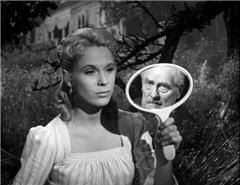
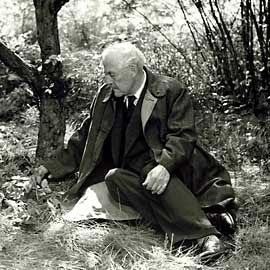
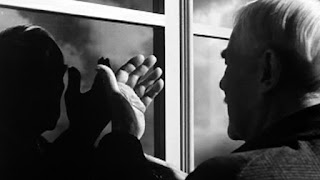
This is the first film I watch by Ingmar Bergman and the trailers from his collection look great!The story is about an old doctor (Isak Borg), who is called to receive an honorary award after 50 years of medical practice in Lund. Essentially, it is a road movie that portrays a man, who realizes how estranged he has been from his son all these years. His daughter-in-low is there as well to enlighten him that she plans to break the cycle of coldness and empty existance in
the family.


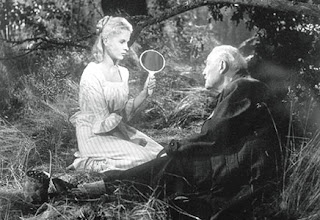
Dr Isak Borg visits a number of places that hold precious memories of his c
hildhood and adolescence. He has always been busy doing something else,instead of enjoying the company of the ones he loved. One of the places is a strawberry lawn, where he fe lt in love and lost his lover because of his brother. He meets three youngsters going away traveling and a married couple with problems. They all end up in his big car and through them, he relives some of the sorrow he'd had,as well as the best years of his youth.


I love the part in the beginning, when Isak has a nightmare of being death. It features stunning elements from the German expressionism and it makes you read the frame, be active in the process of watching. In a way, this film makes me very calm through the use of white colors, but also provokes interest to find out what is going on deep under surface.


When Bergam has made this film, he though it was about a doctor with certain flaws and that was all. Later on he admitted to himself, it is actually exploring his own family. It is interesting how much our lives influence the films we make, without realizing. In screenwriting, they make us admit out darkest secrets, so we are aware of what really bothers us.
Bergman believed that Dr Isak was his father. Only after a few years he was able to admit it was himself he was trying to portray, through the experience in his family. He has felt as an unwanted child, and has grown up in the same atmosphere that has produced Isak. The final scene in the end sums up beautifully Bergman's dearest memories and longings of his family at the sea coast, enjoying the afternoon fishing.


In a way, Bergman reminds me of Wong Kar-wai because of the similar philosophical topics they explore. Both of them intrigue the audience with the deep psychology going through the
characters.


Tuesday, 12 January 2010

Capote


"It's a scientific fact... For every year a person lives in Hollywood, they lose 2 points of their IQ"


Truman Capote invented the "nonfictional novel" in America and has often been portrayed as peculiar and extravagant, regularly on the front pages of
newspapers with pictures from the beau monde lavish parties. Being the author of the best-selling novels "Breakfast at Tiffany" and "In Cold Blood", his astonishing and flamboyant personality seems irresistible for screenwriters. One of them is Dan Futterman, who concentrates on a specific period of Truman's life to create his dramatic screenplay "Capote".


In the period of looking for ideas to develop, Dan Futterman is mostly interested in the inherent duplicity in the relationship between a journalist and a subject. While the journalist has a drive for a great story, there is also a genuine affection to the subject. For the subject, there is a conscious or unconscious desire to be portrayed in the best poss
ible light. The journalist, however, has more control and can manipulate the subject to get a sensational story.

Having read Gerald Clarke's biography of Truman Capote, Futterman recognizes the jeopardy of this dilemma in Truman's 6 year research of "In Cold Blood". It all starts with the horrific murder of a wealthy farmer family in Kansas, where 4 of the family members are bruta
lly killed. Truman cares more about the impact this crime has spread on the community, than the killers and whether or not they'll be caught. He goes there on a research
with his childhood friend Nell Lee Harper (author of "To Kill a Mockingbird"), with the drive and aspiration to write his best story which will gain him further critical acclaim and populari
ty in the writing circles.

Eventually, Capote meets the 2 murderers, and one of them absolutely fascinates him with his quiet, mystical drawing power. Perry Smith indeed is a tough criminal, but has also grown up as an outsider just like Truman. The journalist has a sudden need to understand his subject, to explore him further and find out the reasons that led to the shocking crime. Essentially, they both have similar artistic qualities, but one has succeeded in life and the other has reached the bottom. Truman's motivations for being involved with Perry are mixed- on the one hand there is a genuine caring for him, on the other hand is the purely mercenary interest.


Clifton Collins Jr. as Perry Smith and Philip Seymour Hoffman as Truman Capote

What Futterman succeeds to build into his screenplay is the dramatic arch of a man's ambition winning out over the better part of himself. He knows that Truman will get to the final point, where he has the gripping story, the tribute and everything he's aimed for, but the events have changed him and he's innerly destroyed.

I find the character of Perry Smith very interesting to construct, making him sympathetic enough for the audience to get involved with his secrets and ostensibly calm
world. Just when we start to see him as a victim of Capote's game, in the last 10 min
utes of the screenplay we are soberly reminded that after all, he is a criminal and is condemned to death.

Both Futterman and the director Benner Miller are trying to present Truman's starting point of descending as an unintended consequence of himself- good motives turned bad, dangerous drives that people have. It begins with the public facade and peels back to the more disturbing reality behind the charisma. What particularly attracts me to this script is the almost invisible perspective that Capote was destined for great things and in the same time, destined for self-deconstruction. We are able to see beyond the flamboyant personality, in the dramatic image of this highly celebrated author.

Tuesday, 8 December 2009

La Dolce Vita


!Paparazzo!


Even 49 years after the original release, this timeless classic still captivates you with its style and elegance. After all, we are talking about a 3 hour long film! La Dolce Vita tells the story of the charming journalist Marcello, who has been seduced by the enthralling life the elite circles of Rome offer. At night he is the well known glamourous reporter, who every woman wants to be with. But in the morning, Marcello has to come back to his nagging girlfriend Emma, associated mainly with domestic work and other such the mundane activities.


He is struggling to come in terms with his life, on one hand enjoying the benefits of his job and hoping it will help him further to become a serious writer, and the on the other hand searching for the best formula for happiness. Even though Marcello is often swept away by celebrities and various parties, he is often entusiastic, but yet reserved. As if he is quietly observing the life of the rich and beautiful, contrasting it with his own.


The film opens with Marcello's everynight occupation. He is trying to spot the hottest gossip on the street and take the best pictures. I love the outdoor restaurant scenes, taking you into a life that has just begun. The type of characters that Fellini uses usually wake up at night. Back to the scene, Marcello is in a bar when he spots the gorgeous Maddalena, a heiress who is always in the spotlight. After spending a night with her in a random prostitute's house, Marcello comes home in the morning to find out that his girlfriend has tried to posion herself. It is the first time we see details of his flat, or more like the lack of any. Everything is very plain- white walls, telephone lying on the floor, not much furniture. In fact, the only piece of furniture we see is a double bed. We already know that the character is quite reluctant to spend time at home. It has become just a tedious place to sleep next to a domestic assistant (This is how he refers to Emma later on)


Fellini has carefully constructed Marcello first as bored and reserved, then adventurous and observing, until he finally transforms into a snob that has been engulfed by the guilty pleasures of the 'sweet life'.


It is worth noting the moment he meets Sylvia (Anita Ekberg). She is playing a Hollywood actress visiting Rome with her alcoholic husband. Marcello is fascinated by her charm and energy. The famous sequence in the 'Trevi Fountain' has taken 1 week to film in JANUARY!!! Apparantly, Marcello Mastroiani has been afraid to get into the freezing water, so he had a bottle of vodka. But even that hasn't helped him, because he'd jumped in the water only to fall on his face. They must have had great fun filming that. However, taking in mind that Anita Ekberg is basically promoting the film with all the posters, one would expect to see her for more than 1 hour. It is true they didn't know it would be a massive hit, but still she has been the main figure on the old posters as well.

I pesonally prefer to see more of the other actress playing Maddalena. She had more style and elegance, surrounded by mystery and secrets. I think it would have contributed to the story if Marcello had more encounters with her, before he claimed he wanted to marry her.


Bringing it to an end, I would like to note how great Marcello Mastroiani is in that role, as well as in 81/2! He has somehow defined the classical look of the film director with black sunglasses, that Hollywood has borrowed plenty of times. Almodovar is a big Fellini fan, he often refers to him in his own films. Even though Federico Felini doesn't rely on a script, he has managed to create stunning films.


I'm excited about Nine that is coming out in December, because of it's resemblance with Mastoiani. These days it's very difficult to find stars to play older stars, so no one really fits for Marcello Mastroiani.


'They come for you in the morning in a limousine; they take you to the studio; they stick a pretty girl in your arms... They call that a profession?Come on!'